



Tram Derailment, Expansion of the Kure Line, and the Geibi Line Rapid Service — Hiroshima’s “Transport Pipes” are Shaking Simultaneously

Related Articles
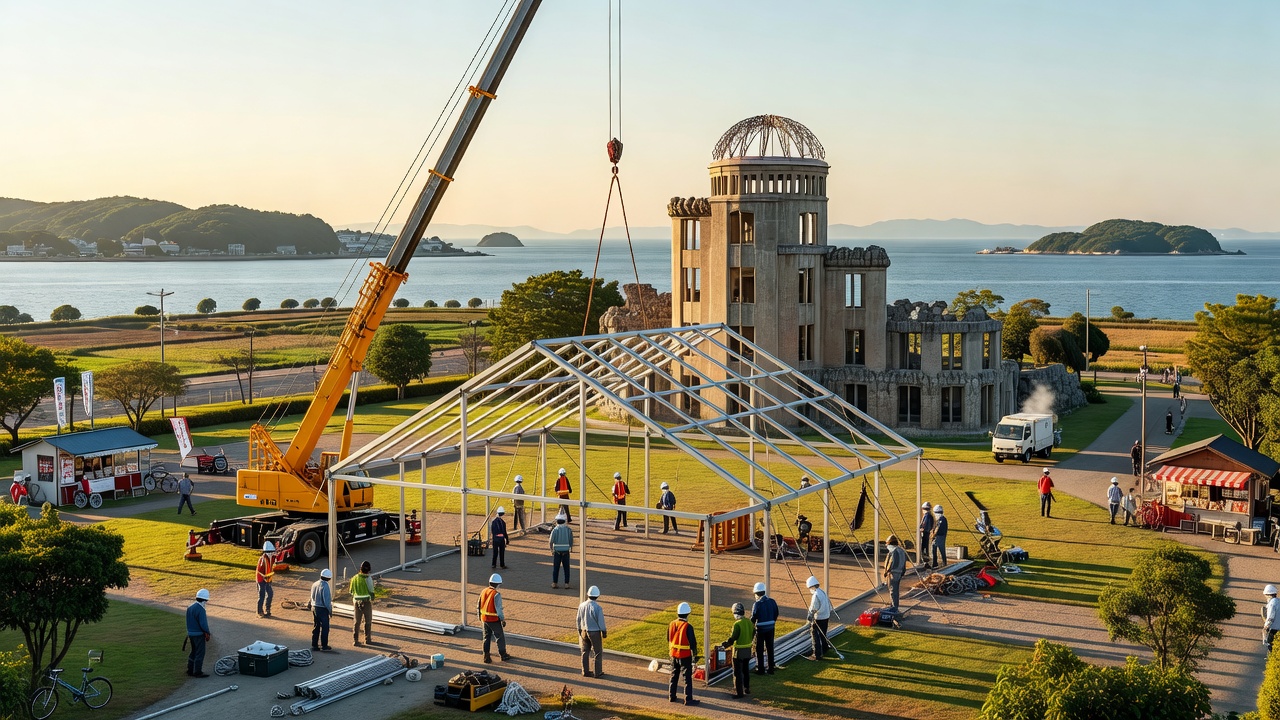
Faults, Expansion, and Extension — Three Pipes in Motion
If we liken Hiroshima’s transportation infrastructure to a single “pipe,” this autumn, three pipes are shaking simultaneously.
One is the derailment of a tram that collided with a bus at the Hatchobori intersection in the city center — a “fault” in the pipe. Another is the completion of the excavation of the Koyaura Tunnel as part of the four-lane expansion of the Hiroshima-Kure Road (Kure Line) — an “expansion” of the pipe. And the third is the introduction of the weekend-only rapid service “Shobara Liner” on the Geibi Line — an “extension” of the pipe.
Each incident could easily be a brief local news item on its own. However, when viewed together, they present a scenario where the city of Hiroshima is simultaneously questioning “who, where, and by which pipe are we transporting?” A faulty pipe, a thickening pipe, and a pipe striving to survive while remaining thin — I want to see the faces of the people behind each of these scenarios.
—
Tram Derailment at Hatchobori — A Crack in the Blueprint of “Coexistence”
Around 4:35 PM on September 9, a tram operated by Hiroshima Electric Railway derailed after colliding with a bus at the Hatchobori intersection in Naka Ward, Hiroshima City. A woman in her 60s reported abdominal pain and sustained minor injuries. The tram remained at the scene for about two hours, causing disruptions to the surrounding tracks.
The Hatchobori intersection is one of the city’s major transportation hubs, where the Hiroshima Electric Railway’s Lines 1, 2, and 6 converge, along with routes from Hiroshima Bus and Hiroshima Electric Railway buses. There are sections where the tram tracks run parallel to the bus lanes with only a few dozen centimeters of distance between them. While the close physical proximity of vehicles is a common fate for cities with trams, Hiroshima has another context to consider.
Starting in the fiscal year 2024, Hiroshima City is advancing the construction of a new tram route in front of Hiroshima Station, coinciding with the redevelopment of the station’s south exit. The plan is to position the tram as the “spine” of urban transportation, with buses serving as its “ribs” — a blueprint for coexistence. However, this recent derailment has introduced a small crack in the assumption that underpins this blueprint: the idea that the same roadway can be safely shared.
Details regarding the cause of the accident have not yet been disclosed. I do not intend to speculate here. However, it is a fact that approximately 100,000 passengers use the tram operated by Hiroshima Electric Railway each day, and the total number of passengers on city buses exceeds that. These two “pipes” continue to intersect on the limited-width roads of the city center. As we transition from the stage of “aiming for coexistence” to “designing it,” the precision of traffic flow design and signal control at each intersection is now under scrutiny.
—
Four-Lane Expansion of the Kure Line — Thickening a Pipe Over 30 Years in the Making
Approximately 20 kilometers southeast of the derailment site, the four-lane expansion of the Hiroshima-Kure Road (Kure Line) is quietly but steadily progressing.
In September 2024, the excavation of the Koyaura Tunnel (approximately 740 meters in length) was completed. According to the Hiroshima Road Office of the Ministry of Land, Infrastructure, Transport and Tourism, about 90% of the tunnel excavation and 70% of the bridge construction for the entire four-lane project have been completed. The project budget is approximately 70 billion yen. Although the official completion date is still “undetermined,” the progress of the construction suggests that the opening for use may be within a few years.
This four-lane expansion is deeply connected to the heavy rains in western Japan in 2018. During the torrential rains, the Hiroshima-Kure Road itself was severed by landslides, temporarily eliminating the “pipe” connecting Hiroshima City and Kure City. Kure City has a population of about 210,000 (as of 2024). The experience of being cut off from the Hiroshima metropolitan area has transformed the meaning of the four-lane expansion from “traffic congestion countermeasures” to “ensuring alternative routes in times of disaster.”
By thickening the pipe, we create time savings for commuting and logistics during normal times, and redundancy as a detour in emergencies. However, naturally, as the pipe thickens, people and vehicles will concentrate in that pipe. If the capacity of the connecting roads on the Kure City side and around the Niho Junction on the Hiroshima City side cannot keep up, the bottleneck will simply shift. We have entered a phase where not only the thickness of the pipe but also the design of the “joints” of the pipe is being questioned.
—
Geibi Line “Shobara Liner” — Who Will Use the Thin Pipe?
The third pipe is the thinnest: the JR Geibi Line.
In the autumn of 2024, JR West announced that it would operate the weekend-only rapid service “Shobara Liner” between Hiroshima and Bingo Shobara. The service will run for 21 days. By limiting the number of stops, the aim is to significantly reduce the travel time for this section, which usually takes over two hours.
Behind this rapid service lies the issue of the Geibi Line’s viability. According to the route-specific financial data published by JR West in 2022, the transport density between Bingo Shobara and Bichu Kamiyama on the Geibi Line is less than 50 passengers per day. This is among the lowest levels of any JR line in the country. The line is also subject to discussions by the national “Reconstruction Council,” which is debating whether to maintain it as a railway or convert it to a bus service.
The “Shobara Liner” is a move introduced amid this debate. Whether we call it a “lifeline measure” or an “experiment of possibilities” changes the perspective.
One thing to ponder is the question of “who will benefit from this rapid service?” Being limited to weekends means it is targeting tourists and returning residents rather than weekday commuters and students. In other words, it is not a measure to strengthen the daily transportation options for local residents, but rather a structure that aims to demonstrate the line’s significance through numbers by attracting people from outside.
The population of Shobara City along the line is about 32,000 (as of 2024) and continues to decline year by year. There are voices from local municipalities expressing that they do not want a line that attracts tourists but rather one that can be used by residents. How the number of passengers fluctuates during the 21 days of the rapid service will be one of the factors determining the thickness of the Geibi Line pipe.
—
What Becomes Visible When We Line Up the Three Pipes
Tram — the urban pipe. 100,000 users daily, where the pipes collided.
Hiroshima-Kure Road — the intercity pipe. Currently being thickened at a cost of 70 billion yen.
Geibi Line — the regional pipe. Attempting to measure the value of the thin pipe with a 21-day rapid service.
Each of the three pipes is moving in a different context. However, what they share in common is the underlying recognition that none of these pipes can sustain themselves as they currently are. The tram is being forced to design for coexistence, the Kure Line is expanding after experiencing the disappearance of the “pipe” during a disaster, and the Geibi Line must demonstrate its justification for existence through numbers.
There is another question that runs through all three pipes: “Who benefits from these pipes?”
The primary beneficiaries of the tram are elderly residents and commuters who do not own cars in the city center. The ones who will benefit the most from the four-lane expansion of the Kure Line are those commuting daily from Kure to Hiroshima and the trucks responsible for logistics. The rapid service on the Geibi Line will cater to tourists visiting Shobara on weekends.
Behind the decisions that determine the thickness of the pipes lies the choice of “who to prioritize.” This choice often gets buried in budget allocations and policy documents, but it ultimately affects the lives of those who actually use the pipes.
—
Numbers and Scenes to Watch Going Forward
Moving forward, here are the key points to monitor regarding these three pipes.
Tram: The results of the investigation into the cause of the accident and the specifics of the recurrence prevention measures announced by Hiroshima Electric Railway. In particular, how the traffic flow design for the tram and bus lanes will be revised in preparation for the opening of the new route in front of the station (scheduled for spring 2025).
Hiroshima-Kure Road: Confirmation of the start date for the four-lane expansion and progress on the development of the connecting roads around the Niho Junction. Whether the “joints” created by thickening the pipe will lead to congestion.
Geibi Line: Passenger numbers during the 21 days of the “Shobara Liner.” And which direction the discussions at the Reconstruction Council will take regarding the continuation of the railway, conversion to a bus service, or a third option.
The transportation infrastructure of Hiroshima as a city is simultaneously breaking, thickening, and breathing while remaining thin on a single map. Ultimately, which pipes remain and which disappear will be determined by whether or not there are people who use those pipes.
While the design of the pipes is drawn by the government and operators, it is the people who pass through them every morning that give them life.


 JA
JA EN
EN