



A Place Visited by 2.58 Million and the Prefecture with the Lowest Migration Aspirations Ranking—The Paradox of Interest in Hiroshima

Related Articles
A Place Visited by 2.58 Million and the Prefecture with the Lowest Migration Aspirations Ranking—The Paradox of Interest in Hiroshima
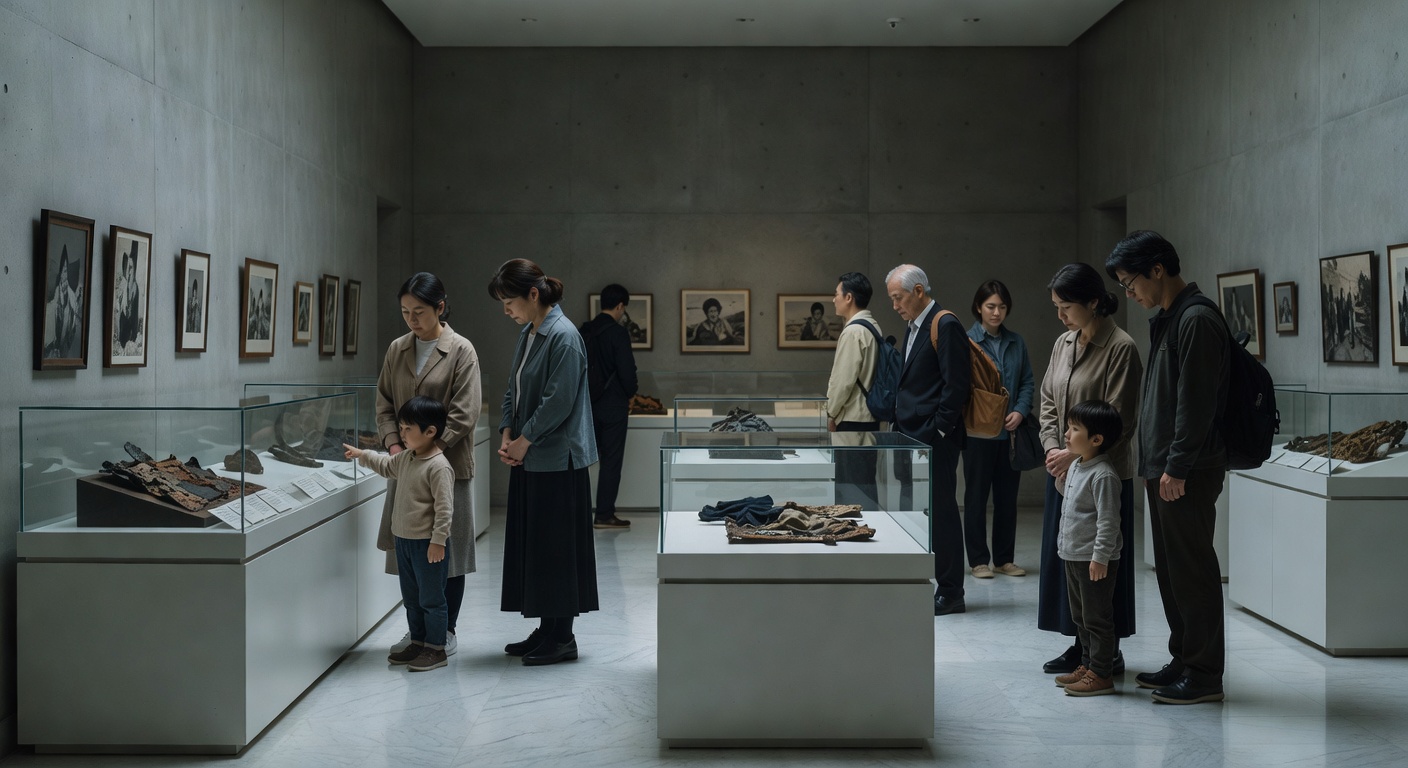
In the fiscal year 2024, approximately 2.58 million people visited the Hiroshima Peace Memorial Museum, setting a new record. Foreign visitors accounted for 36.6% of the total, also a record high. One visitor wrote in the guestbook, “I want to remember what happened and make the right choices.” Hiroshima has become a place that people around the world feel they “must visit.”
However, in the 2024 migration aspiration ranking released by the Hometown Return Support Center, Hiroshima Prefecture has sunk to its lowest position ever. The contrast between Hiroshima as a place people want to visit and as a place they want to live—what does this paradox mean?
The Gap Between “Interest” and “Settlement”
Let’s take a closer look at the breakdown of the 2.58 million visitors. Among the museum’s visitors, approximately 940,000 were foreigners. Compared to the pre-COVID year of 2018 (about 1.66 million total visitors, with around 520,000 foreigners), the overall number has increased by about 1.5 times, and the number of foreign visitors has increased by about 1.8 times. The “interest” in Hiroshima is clearly expanding.
However, this interest ends with “visiting.” The migration aspiration ranking survey targets visitors to consultation centers in Tokyo and Osaka and participants in seminars, reflecting the intentions of those who are “actually considering migration.” The fact that Hiroshima Prefecture has dropped in ranking suggests that there is a relatively large group of people who are “interested in Hiroshima but do not consider it as a living option.”
Why does this gap exist? Several structural factors can be identified.
Factor 1: The Strength and Limitations of the “Hiroshima = City of Peace” Brand
Hiroshima’s external brand overwhelmingly centers on “peace.” The Atomic Bomb Dome, the Peace Memorial Museum, and the Peace Memorial Park—these UNESCO World Heritage sites and memory devices are at the heart of the city, giving it extremely high international recognition. The hosting of the G7 Hiroshima Summit further strengthened this brand.
However, the brand of “City of Peace” may motivate visits but is less likely to motivate migration. Those considering migration seek “the texture of living,” such as job options, child-rearing environments, medical access, housing costs, and community openness. There are concerns that Hiroshima has not effectively communicated this information, often overshadowed by its peace brand.
In contrast, Nagano and Shizuoka Prefectures consistently rank high in migration rankings because they effectively convey images of living such as “rich in nature,” “close to Tokyo,” and “good food.” Hiroshima has oysters, okonomiyaki, and the Seto Inland Sea. However, there are still few opportunities to systematically discuss these as “living attractions.”
Factor 2: The Ongoing Outflow of Young People
Hiroshima Prefecture has a population of about 2.74 million (estimated for 2024). It has consistently decreased from approximately 2.88 million in 2000. Particularly serious is the outflow of individuals aged 18 to 24. While Hiroshima Prefecture has higher education institutions such as Hiroshima University, the percentage of graduates who stay in the prefecture is limited. The industrial structure, which has a high ratio of manufacturing, appears narrow for young people seeking IT and creative jobs.
This structure also affects migration rankings. The respondents to the rankings often include people in their 20s to 40s, and if there is a weak image of “young generations thriving” or “new jobs being created” in Hiroshima, it is less likely to emerge as a candidate location.
Quiet and Concrete Efforts to Bridge the Gap
So, is Hiroshima doing nothing? Not at all. What is noteworthy is the steady increase of “living receptacles” without any flashiness.
Hiroshima City has created a “Hiroshima Dialect Handbook” for foreign nursing staff. Terms like “taigii” (tired/troublesome), “habuteru” (sulking), and “jake” (therefore)—if caregivers cannot understand the dialect used by clients, it directly affects the quality of care. This handbook is designed to welcome foreigners not just as “labor” but as “shared members of the community.” Though it is a small booklet, it carries a message of wanting them to “be part of our lives.”
In Asakita-ku, Hiroshima City, the “Kabe Minami Certified Children’s Garden” has been established on the site of the former Asakita Municipal Hospital. The transformation of a hospital site into a children’s facility is symbolic. It fills the gap left by the relocation of medical functions with child-rearing functions. As the demographic composition of the community changes, the role of the land is being rewritten. While the capacity is only a few dozen, having such a facility can significantly influence the judgment of child-rearing generations on whether they can “live here.”
Furthermore, the new Central Library, relocated in front of JR Hiroshima Station, has enhanced its floors for children and youth. Its location in front of the station is along commuting routes, designed for easy drop-in visits. The library is free and open to everyone. The significance of placing such a basic function in a prime location is substantial.
Transforming “Visits” into “Stays” and “Stays” into “Settlements”
2.58 million people visit the museum. Most of them are day-trippers or stay for one night. There are several stages before visitors think, “I want to live in this city.”
The first stage is creating opportunities to engage with Hiroshima in contexts other than peace. For example, experiences like shipbuilding training in Onomichi or craft beer brewing in Etajima can overlap with the image of “a city where people create things,” conveying Hiroshima’s multifaceted nature.
The second stage is increasing options for short-term stays. Workation and dual residence trial programs can lower the psychological barriers to migration. Only by actually living for a few weeks can one understand commuting convenience, supermarket offerings, and the atmosphere of the neighborhood.
The third stage is visualizing the “details of living” like the dialect handbook and children’s garden. The decision to migrate is not based on grand visions but on the accumulation of small reassurances.
What Lies Beyond the Paradox
The “paradox of interest” in Hiroshima is not just a problem for Hiroshima. The same can be said for Kyoto and Nara, where the recognition as tourist destinations does not necessarily align with their appeal as places to migrate. The dynamics that drive “places people want to visit” and “places people want to live” are fundamentally different.
However, Hiroshima has one significant strength. The fact that 2.58 million people visit can serve as a massive “entrance.” The question is how many pathways can be designed from that entrance to allow people to feel the texture of living. The dialect handbook, the children’s garden, and the station library are all parts of that pathway.
The pathways are not yet connected. However, the components are gradually coming together.
The places where 2.58 million feet stop and the places where someone decides, “I want to live here” are still on separate maps. The work of overlaying these two maps may not be flashy, but it is undoubtedly progressing in someone’s hands.


 JA
JA EN
EN