



Job Seekers are AI, Selection is AI, Interviews are AI—The Only Way for SMEs to Win in a Recruitment Market Dominated by AI

Related Articles
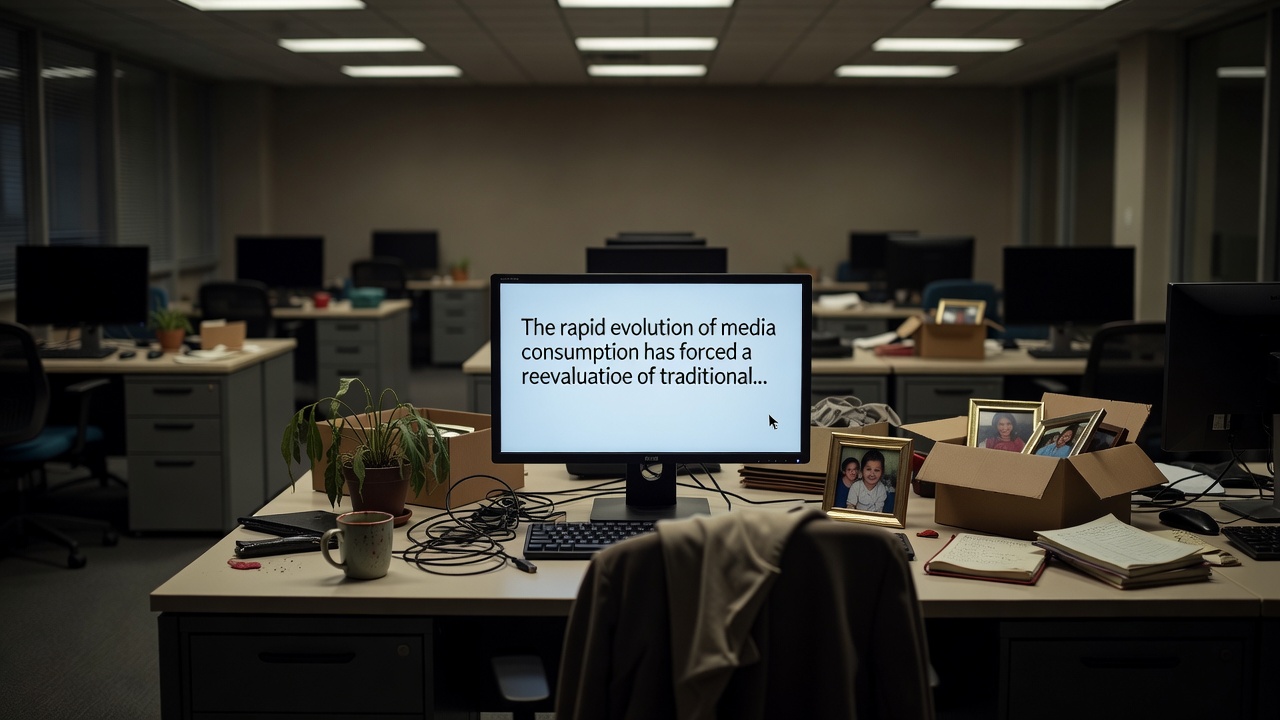

The Recruitment Market is Starting to Break Down
Job seekers are using AI to automatically generate resumes and apply to 100 companies in a single day. On the company side, AI screens applicants, and AI conducts initial interviews. AI is competing against AI.
No one is reading resumes. No one is looking at people.
This “infinite loop of AI recruitment,” reported by Wired, is already a reality. This structural change poses a serious problem for small and medium-sized enterprises (SMEs) compared to large corporations—but at the same time, it presents an opportunity for reversal.
What is Happening: The Collapse in Numbers
First, let’s clarify the current situation.
With the proliferation of AI application tools, the average number of applications per job seeker has reportedly increased by about 2.5 times over the past two years. A survey in the United States found that the average number of applications for a single job exceeds 250, and it is not uncommon for popular positions to receive over 1,000 applications.
What about companies? About 75% of large corporations have implemented Applicant Tracking Systems (ATS), and approximately 70-75% of resumes are filtered out by AI before they ever reach human eyes.
In other words:
- Job Seekers: Apply in bulk using AI → The quality of applications per company decreases.
- Companies: Filter in bulk using AI → They overlook truly suitable candidates.
- Result: Both sides lament that “there are no good candidates” and “no one gets hired.”
As AI has lowered costs, application inflation has occurred, and the signal (whether someone genuinely wants to join the company) has become completely buried in noise. This is the current recruitment market.
What is the Problem for SMEs?
Large corporations can invest millions to tens of millions of yen to build custom models that enhance the accuracy of AI screening. They also have dedicated recruitment teams.
SMEs do not have that.
In a company with 10 to 100 employees, there is typically one person who doubles as the HR manager. The monthly budget for recruitment is 100,000 to 300,000 yen. They receive 100 applications consisting of “AI-generated documents sent to the same companies.”
There’s no way to read them. But spending 50,000 to 100,000 yen a month on ATS is also painful. Even if they do, AI scores the “perfect resumes” created by AI, making it impossible to determine who is genuine.
This is the reality of recruitment for SMEs.
The Structure of Reversal: “Areas Where AI Cannot Be Used” Become the Strongest Weapon
What we want to consider here is, “When the cost of AI approaches zero, what value will rise?”
The answer is clear. The value of things that only humans can do will skyrocket.
In a world where AI writes resumes, screens candidates, and conducts initial interviews, there is no means for AI to measure the genuine desire to work at a particular company.
This is precisely where SMEs can win.
1. Create “Encounters” Instead of “Applications”
Large corporations post job listings and process them with AI. SMEs do not need to play that game.
What specifically can be done?
- The CEO or team leaders share daily updates on social media. Instead of spending 300,000 yen a month on recruitment ads, having the CEO post about the workplace on X or Instagram for five minutes a day generates motivation to “want to work at this company.” The cost is almost zero.
- Make “Please come meet us first” the entry point. Stop the document screening. Instead, start with a 30-minute casual interview. You can understand an AI-generated resume in just 30 minutes of conversation.
- Connect directly through local events and communities. Local SMEs can meet candidates they would never encounter on job sites simply by attending local study sessions and events.
Shift from a game of increasing application numbers to a game of “going to meet the people you want to meet.” In a world where AI enables mass applications, the cost-effectiveness of these “analog connections” has reversed.
2. Turn the Selection Process Itself into an “Experience”
The selection process for large corporations is AI screening → SPI → first interview (AI) → second interview → final interview. For job seekers, it feels like a “game of overcoming obstacles.”
SMEs can turn this to their advantage.
- Incorporate a one-day trial into the selection process. Work together on actual tasks. You can understand skills and personality a hundred times better than from a resume.
- Show candidates “what it will be like to work at this company” during the selection process. Openly share salary tables, career paths, and actual daily schedules from the start.
- Use speed as a weapon in the selection process. While large corporations take 3 to 4 weeks, SMEs can go from interview to job offer in one week. “Speed” is the ultimate differentiator.
A manufacturing company in a rural area (with 40 employees) stopped posting on job sites and switched to sharing daily updates about the factory on Instagram and conducting only casual interviews. As a result, the number of applications decreased to one-fifth, but the acceptance rate for job offers skyrocketed from 30% to 80%. Recruitment costs dropped from about 2 million yen to about 400,000 yen per year.
Fewer applications but higher quality. This is the recruitment strategy for SMEs in the AI era.
3. Use AI for “Administrative Tasks” Rather Than “Judgment”
There is no need to eliminate AI. Just use it correctly.
The situations where SMEs should use AI are clear.
- Scheduling interviews (automating saves 5-10 hours a month)
- Creating job listing text (ChatGPT reduces 30 minutes to 5 minutes)
- Generating initial response templates for applicants
- Organizing and summarizing evaluation notes after interviews
Conversely, the judgment of “Do I want to work with this person?” should not be entrusted to AI. The moment this is outsourced, the greatest strength of SMEs—”the CEO or field’s ability to discern”—dies.
Tools costing from free to a few thousand yen per month are sufficient. About 80% of what large corporations spend hundreds of thousands of yen on is unnecessary processes for SMEs.
A Cost Often Overlooked: The “Mental Exhaustion” of Recruitment
Another serious issue that is not easily quantifiable is the exhaustion of recruitment personnel who process a flood of AI applications daily. They read 100 templated applications, of which only 5 may be genuine. This is repeated every week.
In SMEs, recruitment personnel often double as other roles. The stress of recruitment tasks can lower performance in their primary duties, and in the worst-case scenario, the recruitment personnel themselves may quit, leading to a counterproductive situation.
That’s why stepping away from the game of “processing a large number of applications” is a sound business decision. Instead of waiting for applications by posting on job sites, approach the people you want to meet. The number of applications may decrease, but the exhaustion of the personnel will dramatically reduce.
So, What Should We Do?
To summarize:
Stop doing:
- The style of “waiting for applications” by posting on job sites
- Over-investing in AI screening tools
- Making selections based solely on resumes and work history
Start doing:
- Social media updates from the CEO and field leaders (can be done starting today, at zero cost)
- Abolishing document screening → Casual interviews first
- Introducing one-day trial employment
- Speedy selection from interview to job offer within one week
- Using AI only for administrative tasks (scheduling, text creation, note organization)
Shift in mindset:
As AI has brought the cost of applications and selections close to zero, SMEs can never win in a “quantity” competition against large corporations. However, the one-on-one relationship of “I want this person to come” and “I want to work at this company” cannot be created by AI.
Recruitment for SMEs is not a game of competing against AI. It is a game of how deeply they can create “human-to-human connections” that AI cannot replicate.
And this is a battle where SMEs, with their visible CEOs and close proximity to the field, have an overwhelming advantage.
In a world where everyone uses AI, the last to win will be the “companies that truly see people.”


 JA
JA EN
EN