


Demand for Refund from Deloitte: AI Paper Cites Nonexistent Articles, Nikon Award Revoked—Companies Unable to Verify ‘Outsourced Deliverables’ Are in Trouble

Related Articles

Conclusion First
The era of thinking “it’s safe because it’s outsourced” is over.
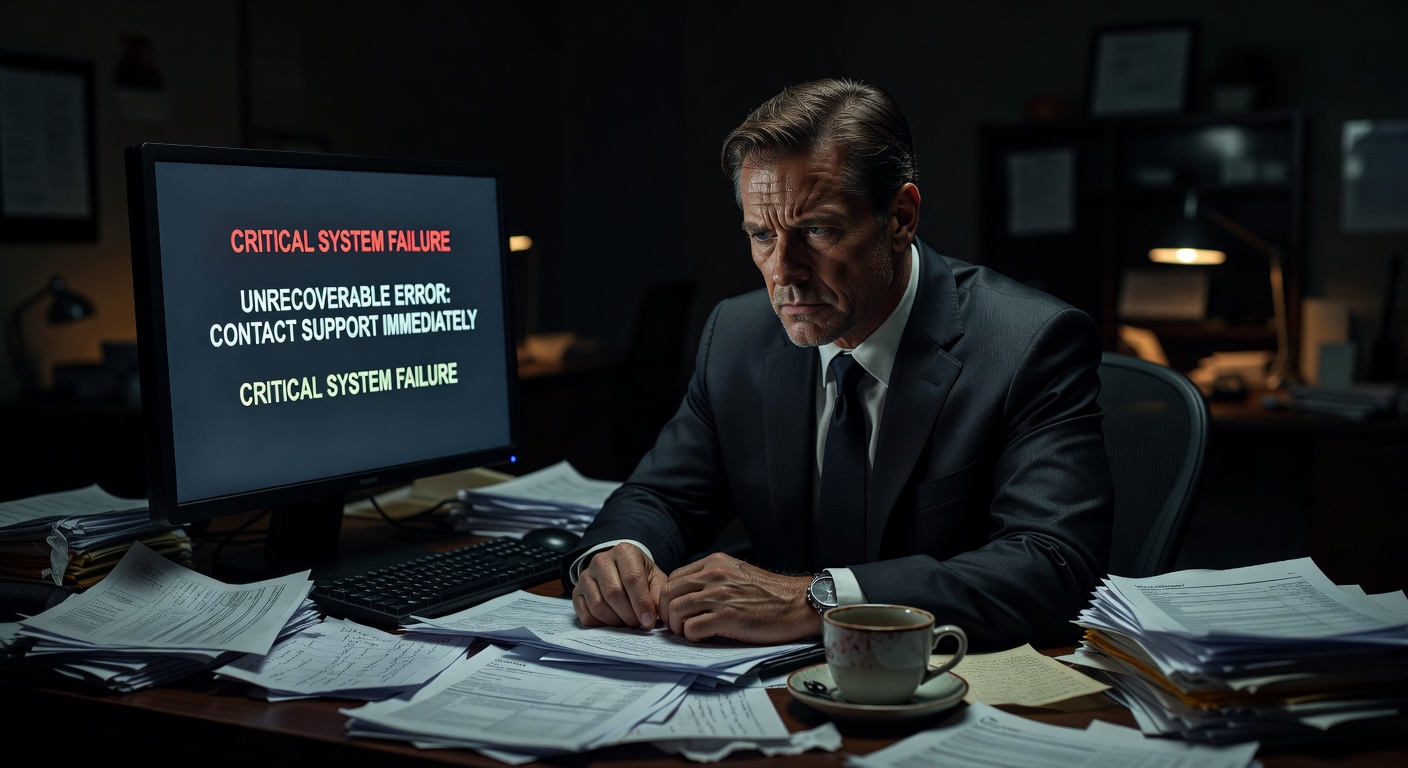
A report delivered by Deloitte for $166,000 (approximately 25 million yen) contained fictitious citations generated by AI, along with discrepancies in cost calculations amounting to hundreds of millions of dollars. The government of Western Australia is demanding a refund from Deloitte.
This is Deloitte—a giant consulting firm, one of the Big Four accounting firms, with annual revenues exceeding 6 trillion yen.
The feasibility study for a university merger delivered by Deloitte was found to be at a level deemed “useless” upon thorough examination. What does this imply?
It means that the assumption that “quality is guaranteed when relying on a major firm” has collapsed.
This issue is particularly serious for small and medium-sized enterprises (SMEs) because they have overwhelmingly fewer resources to verify the deliverables from their outsourcing partners.
—
Three Incidents Illustrating the Same Structure
We will discuss three incidents, but they all stem from the same root.
1. Deloitte: $25 Million Report with Fictitious Citations
The Western Australian government commissioned a study report on a university merger, costing AUD 166,000 (approximately 25 million yen). Upon scrutiny of the deliverables, multiple fictitious citations believed to have been generated by AI were found, along with discrepancies in cost estimates amounting to hundreds of millions of dollars.
In a 25 million yen report, the cited sources do not exist. The cost calculations are off by hundreds of millions.
What would have happened if this had not been verified? Based on these figures, the university merger could have proceeded, distorting policy decisions worth hundreds of billions of yen.
2. Academic Paper: Citing Nonexistent News Articles
An academic paper concerning Z-Library (a piracy e-book site) cited an article from a news site called TorrentFreak. The problem was that the article did not exist. It was a fictitious source generated by AI hallucination.
Academic papers are published after peer review. This means that the reviewers also failed to detect this fictitious citation. The assumption that “it’s fine because experts are checking” no longer holds.
3. Nikon Photo Contest: AI-Generated Work Wins Award—Revoked
A work that won an award in Nikon’s photo contest was found to be AI-generated, leading to the revocation of the award. The judges—professional photographers—mistakenly evaluated the AI-generated piece as “an excellent photograph.”
The common structure among these three incidents is this: “The appearance of the deliverables” seems to have sufficient quality. However, upon verification of the content, it is fundamentally flawed.
As the quality of AI output has improved, the traditional verification method of “judging quality by appearance” has ceased to function. A polished report, a well-structured paper, a beautiful photograph—all may seem fine at first glance. That is why they slip through unnoticed.
—
What Happens After the Cost of AI Decreases
Here, I want to discuss the structural issues.
The cost of producing “plausible deliverables” using AI has dramatically decreased. Report writing, research, image generation, and content creation—tasks that previously took humans dozens of hours can now be completed in minutes with a “plausible” output.
Let’s take consulting reports as an example. Traditionally, researchers would spend hundreds of hours reading literature, gathering data, analyzing, and compiling reports. This labor cost formed the basis for fees in the hundreds of thousands of yen.
With AI, a significant portion of this process can be automated. This is not inherently a bad thing. The problem is that as the “cost of creation” has decreased, the weight of the “cost of verification” has increased, yet most companies are not investing in that area.
In the case of Deloitte, how much of the 25 million yen fee was allocated to “verification”? It is likely that they created a draft using AI, and a human merely polished it before delivery—such was the structure.
In other words:
- The “cost of creation” with AI has decreased to one-tenth.
- However, the “cost of verification” remains unchanged; in fact, it has increased.
- Yet, the verification process is being omitted.
This gap has led to the three incidents discussed.
—
What Changes for SMEs
You might think, “This is a Deloitte issue; it has nothing to do with us.” On the contrary, this problem could be fatal for SMEs.
There are three reasons.
1. High Dependency on Outsourcing
SMEs do not have researchers, designers, or writers in-house. Therefore, they outsource. Website creation, brochures, grant application documents, marketing materials—the likelihood that outsourcing partners are using AI to create these is now nearly 100%.
2. Lack of Personnel for Verification
There are no specialized personnel in-house who can verify whether the deliverables from outsourcing partners are “really correct?” If it looks good, they simply approve it with a “like.”
3. High Impact of Failures
For large companies, a loss of 25 million yen is painful but not fatal. For SMEs, if a 1 million yen outsourced report turns out to be useless, it can significantly impact cash flow. If the numbers in a grant application are incorrect, not only will they not be accepted, but they will also lose credibility.
—
So, What Should Be Done?
We don’t need abstract discussions. Let’s narrow it down to three concrete actions.
1. Make “Source Verification” a Delivery Condition
Include the following in contracts with outsourcing partners: “All citations and sources in the report must include real URLs or bibliographic information. If fictitious citations are discovered, a refund will be required.”
This alone will prevent outsourcing partners from delivering AI outputs as they are. They will have to verify each citation, which creates additional work. The cost of modifying the contract is zero if you have a legal advisor; even without one, it can be done for a few tens of thousands of yen.
2. Have a Mechanism to “Verify with AI”
Ironically, AI can also be used to verify AI outputs.
For example, you can ask ChatGPT or Claude to check, “Is this URL real?” for the citation URLs in the delivered report. Alternatively, you can have them check for consistency in numbers, such as, “Is there a contradiction in cost estimates between page 3 and page 7 of this report?”
With an AI tool costing 2,000 to 3,000 yen per month, you can check the quality of outsourced work worth hundreds of thousands of yen. The cost-effectiveness is clear. While it may not be perfect, it is a world apart from zero checks.
3. “Try Doing It Yourself Just Once”
This may be the most important point. Try doing the outsourced work yourself using AI just once.
If you are outsourcing research reports, have ChatGPT write one on the same topic. This way, you will intuitively understand points like “AI tends to lie here,” “this kind of number is unreliable,” and “this needs human verification.”
You will develop an eye for verifying the deliverables from outsourcing partners. Plus, it can be done for free.
—
The Inverted Structure: Reasons SMEs Can Win
Finally, I want to share some positive thoughts.
For large organizations like Deloitte, report creation has become a “production line” process. One person creates a draft with AI, another person polishes it, and a manager lightly reviews it before delivery. The division of labor has gone too far, and no one is verifying the overall content.
SMEs are different. The CEO reads the deliverables themselves. With a sense of the field, they can notice, “Isn’t this number strange?” The distance between decision-makers and verifiers is close.
This “closeness” will become an overwhelming strength in the AI era.
Large companies, due to their size, are prone to a structure where no one takes responsibility for verifying AI outputs. In contrast, in SMEs, verification begins as soon as the CEO asks, “Is this true?”
The gap in “cost of creation” has narrowed between large companies using AI. The differentiation lies in “verification capability.”
What is needed for this is not massive investment or highly skilled personnel. Just a “habit of questioning deliverables” and “an AI tool costing 3,000 yen per month.”
Companies that approve deliverables simply because they look good will eventually face trouble—just like the Western Australian government that paid Deloitte 25 million yen.
I encourage you to take out one recent outsourced item tomorrow and check whether the cited sources actually exist. Just doing that will change your perspective.


 JA
 EN