



Iwakuni Airport Breaks Records, APA Hotel Expansion, Morning Drama Filming—Can ‘Another Economic Zone’ Grow in the Base Town?

Related Articles
Iwakuni Airport Breaks Records, APA Hotel Expansion, Morning Drama Filming—Can ‘Another Economic Zone’ Grow in the Base Town?
At first glance, the numbers suggest a thriving regional city.
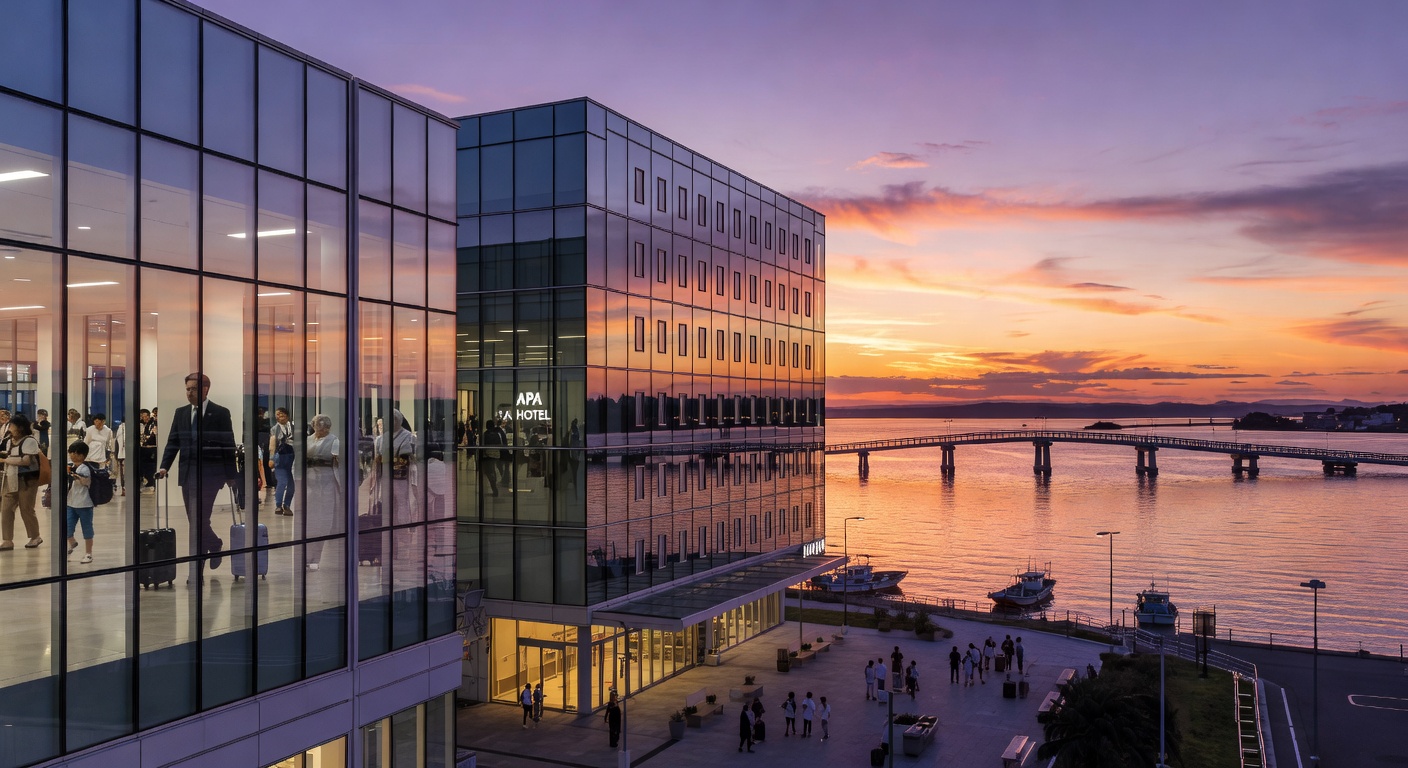
Iwakuni Kintaikyo Airport has seen its passenger numbers reach record highs for two consecutive years. The nationwide chain APA Hotel is set to open its first location in front of Iwakuni Station in June 2025. Additionally, it has been chosen as a filming location for NHK’s morning drama “Anpan,” generating local excitement as the broadcast in the latter half of 2025 approaches.
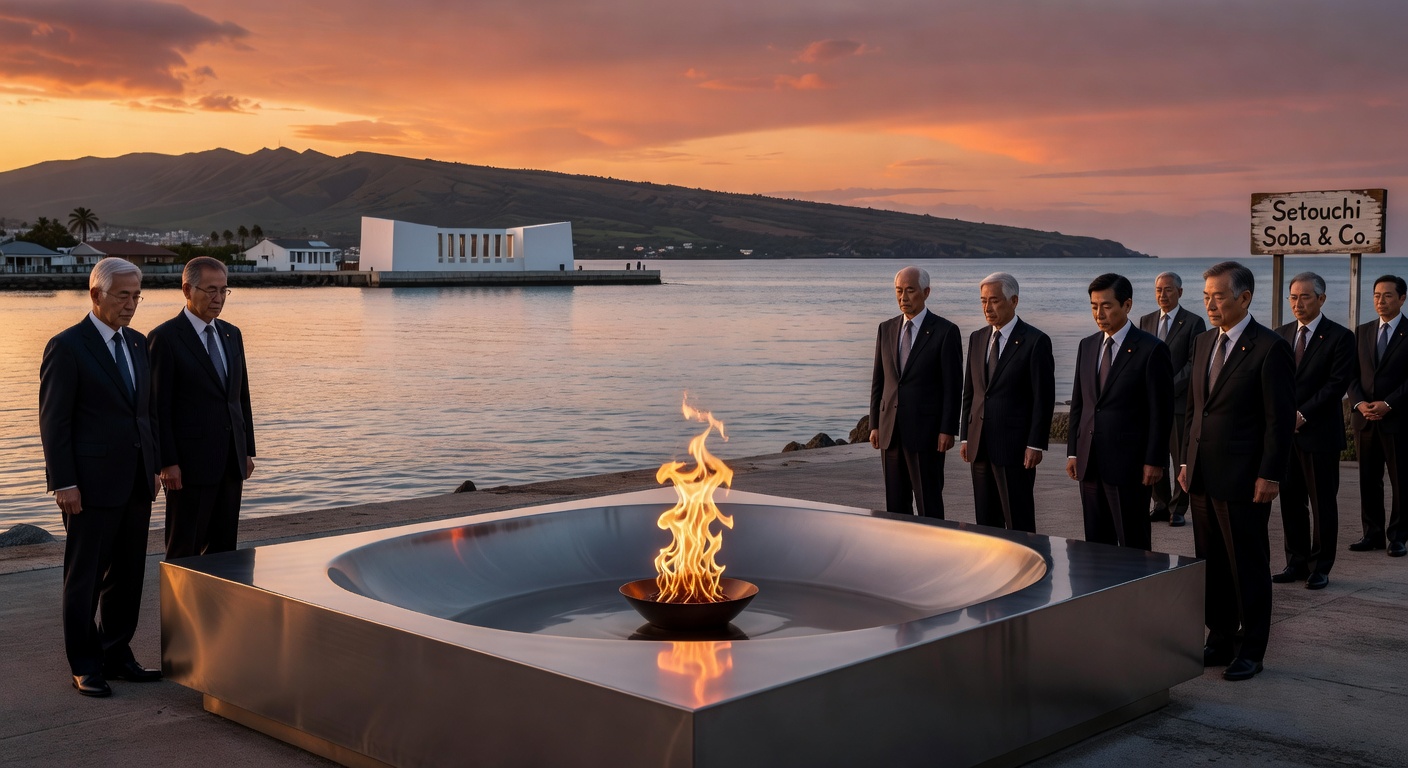
However, when we take a broader look at the map of this city, another outline emerges. Complaints about noise from the U.S. military base at Iwakuni have reached an all-time high, and concerns about land acquisition around the base are also being voiced. The airport’s runway was originally a military-civilian shared facility. In a city where an economy reliant on the base overlaps with one that profits from tourism, the question remains: can “another economic zone” truly develop? We must analyze the structure behind these numbers.
What Airport Passenger Numbers Indicate—A ‘Transit Point’ or a ‘Destination’?
Iwakuni Kintaikyo Airport began operating civilian flights in 2012. Initially, it had about 200,000 annual passengers. By fiscal year 2023, it set a record for the highest number of passengers, and is expected to break that record again in fiscal year 2024. The main route is operated by All Nippon Airways (ANA) to Tokyo (Haneda), with four round trips daily supporting the increase in passenger numbers.
However, interpreting this number as a sign of “Iwakuni’s tourism thriving” may be premature. The passenger figures include business travelers, military personnel, and transfer demand to Hiroshima. When compared with Iwakuni City’s tourism statistics, the growth in overnight tourists is not as rapid as the increase in airport passengers. In other words, while the airport functions as an “entrance to a destination,” Iwakuni City itself may not yet be fully established as a “place to stay.”
Bridging the gap between this “transit point” and “destination” requires the development of accommodation facilities and stay-related content. The expansion of APA Hotel and the filming of the morning drama can be understood in this context.
APA Hotel Expansion—Measuring ‘Demand Temperature’ by Chain Hotels
“APA Hotel Iwakuni Station West” is set to open in June 2025. The APA Group is one of Japan’s largest hotel chains, operating over 700 properties nationwide, and is known for making location decisions based on thorough data analysis. Conversely, APA’s entry indicates that data shows a certain level of accommodation demand in the Iwakuni Station area.
Until now, accommodation facilities in Iwakuni City have primarily consisted of long-established inns and small business hotels. The entry of a national chain will help visualize the option of “staying in Iwakuni” for travelers across the country through its reservation systems and point programs. As the number of accommodations increases, day-trippers may convert to overnight stays, and one-night stays may extend to two nights—this difference generates surrounding consumption in dining, souvenirs, and experiences.
Approximately 3 million tourists are said to visit the Kintaikyo area annually, but many of them are day-trippers. To what extent will the expansion of APA Hotel change this structure? The occupancy rate in the first year after opening will likely serve as a key indicator.
The Filming Location Effect of Morning Drama ‘Anpan’—Can It Surpass ‘Transient’ Status?
The phenomenon of regions chosen as filming locations for NHK’s morning dramas experiencing a tourism boom has been seen in the past. Kuji City in Iwate Prefecture during “Amachan” and Ikeda City in Osaka Prefecture during “Manpuku” both saw a surge in tourists during the broadcast period, followed by a decline after the show ended.
Iwakuni City is the filming location for “Anpan,” which tells the story of Takashi Yanase and his wife, Nobu, with the broadcast scheduled for the latter half of fiscal year 2025. Iwakuni City is the birthplace of Yanase’s wife and a significant setting for the story. The exposure as a filming location will serve as a powerful channel to deliver the name of Iwakuni to the nation.
However, the challenge lies in the post-broadcast period. Whether the morning drama effect can be transformed from a transient boom into a sustainable tourism resource depends on the local community’s ability to create a welcoming environment. The development of location maps, planning related events, and collaboration with restaurants and accommodation facilities—whether these preparations are underway before the broadcast will determine the duration of the effect. I would like to follow the specific actions taken by Iwakuni City and the local tourism association.
The ‘Other Ground’ of an Economy Dependent on the Base
Thus far, we have discussed the bright side of the tourism economy. However, when discussing the economic structure of Iwakuni City, it is impossible to overlook the presence of the U.S. military base.
Iwakuni Base is one of the largest air bases among the U.S. military in Japan, housing about 5,000 military personnel and their families. Grants and subsidies related to the base significantly contribute to the city’s finances, and commercial facilities and restaurants around the base are partly supported by spending from base personnel.
On the other hand, the negative aspects brought about by the base’s presence are also becoming apparent. In fiscal year 2024, the number of complaints regarding aircraft noise reached an all-time high. The increase in flight frequency following the relocation of carrier-based aircraft is a contributing factor. Noise not only directly affects the quality of life for residents but also impacts the image of the area as a tourist destination. Can the experience of tourists quietly gazing at the river surface at the foot of Kintaikyo while fighter jets roar overhead lead to a desire to “come back again”?
Furthermore, reports of land acquisition by foreigners on nearby islands have sparked discussions in the local community regarding security concerns. While this issue may not directly relate to tourism, it touches upon the identity of Iwakuni as a “base town” and cannot be ignored when considering the future of the region.
Can ‘Another Economic Zone’ Grow Within the Dual Structure?
What Iwakuni City faces is not a binary choice of whether to break away from an economy dependent on the base. The base economy will not disappear anytime soon, and there are tangible benefits in the form of grants and employment. The question is whether another economic zone can be nurtured “next to” the base economy.
The increase in airport passenger numbers, the expansion of chain hotels, and the filming of the morning drama are all seeds of this “another economic zone.” However, for these seeds to grow, a suitable environment is needed. Enhancements in accommodation facilities, development of stay-related content, improvements in transportation access, and addressing noise issues are all crucial. If any one of these elements is lacking, tourists will only “pass through” rather than “stay.”
Iwakuni City’s general account budget for fiscal year 2024 is approximately 78 billion yen. By comparing the proportion of base-related grants and subsidies to the proportion of tourism-related tax revenues, we can see the current state of the two economic zones. There is still a considerable distance before the tourism economy can stand alongside the base economy.
However, having a distance does not mean that we have not begun to walk. The numbers at the airport are rising, hotels are being built, and dramas are bringing the city’s name to the forefront—each of these is a small step forward. Whether “another economic zone” can grow in this base town depends on who continues these steps, in what order, and with how much perseverance.
On the same ground, two economic zones overlap. Within that overlap, how thick can the circuit of tourism become? The answer is still unknown.


 JA
JA EN
EN