



AI Welfare Support × 70 Tourism Ambassadors × Postal Office Outsourcing — Edajima Tests the Design Philosophy of ‘Decentralizing Administration’

Related Articles

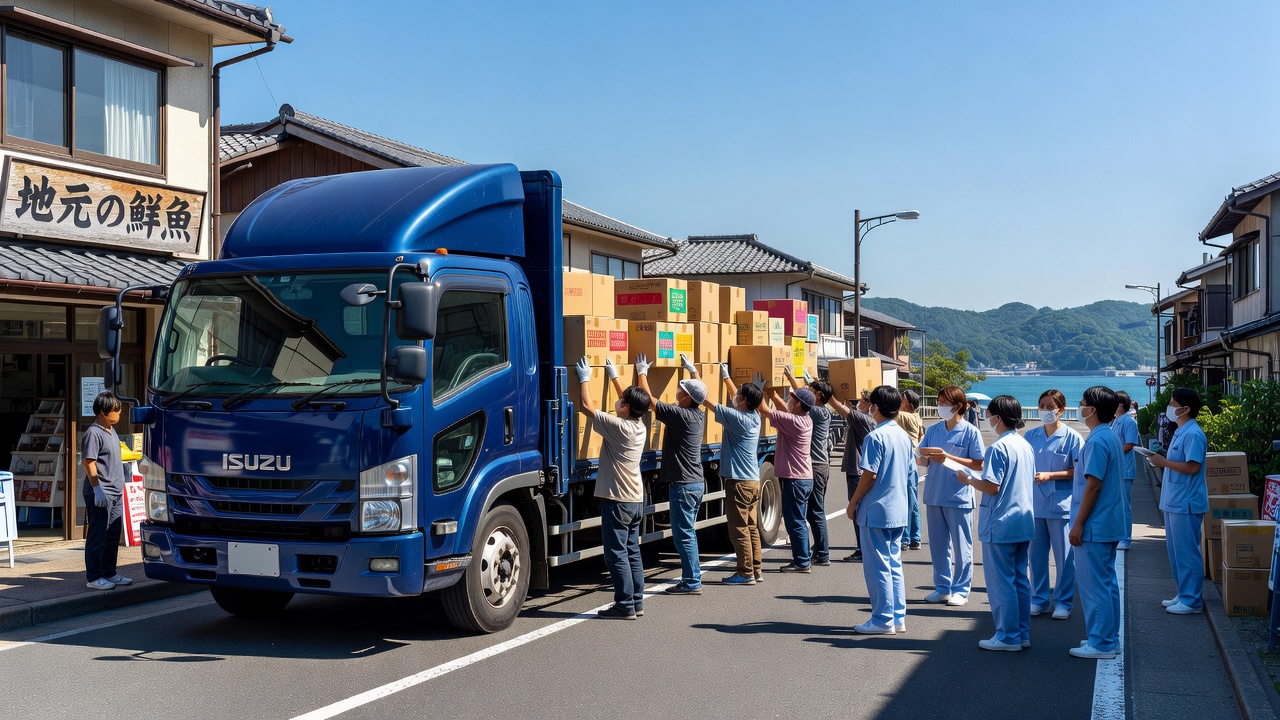
Population of 20,000 Island Questions the ‘Form of Administration’
Edajima City, located in Hiroshima Bay, has a population of about 20,000. On this island, which carries the memories of the former Naval Academy, a somewhat unusual experiment is currently underway.
The initiatives include the efficiency of welfare support using AI, the appointment of 70 citizens as tourism ambassadors, and the outsourcing of administrative services in depopulated areas to the postal office. Individually, none of these initiatives are particularly flashy. However, when viewed together, a common design philosophy emerges: the idea of “distributing functions that cannot solely rely on administration among technology, citizens, and existing infrastructure.”
Who benefits from this? And can this system truly function? Let’s analyze the structure of these three initiatives.
—
AI’s Role: Not ‘Judgment’ but the Speed of ‘Awareness’
Edajima City announced in 2024 its collaboration with a local IT company to implement an AI-based welfare support system. The budget for this initiative is approximately 5 million yen, which is not a large amount for municipal system investment.
What is noteworthy is the intended role of this system. Rather than replacing the “judgment” of welfare services, AI is positioned as a tool to accumulate and analyze data on service usage and consultation records, enabling early detection of gaps in support or signs of change — in other words, it aims to enhance the speed of “awareness.”
In a municipality with a population of 20,000, the number of welfare staff is limited. The number of clients handled by a single caseworker tends to be relatively high compared to urban municipalities. By incorporating AI, changes such as “this household’s service usage frequency has recently changed” or “consultations are concentrated in this area” can be detected without relying solely on human observation.
Importantly, the premise remains that it is ultimately humans who will visit, reach out, and offer help. Technology does not replace people but accelerates the timing for human intervention. Whether this design is upheld will determine the success of the system.
However, challenges are also apparent. While the budget of approximately 5 million yen is realistic for initial implementation, it remains unclear how the ongoing operational and maintenance costs will be managed, or how training systems for staff to effectively use the system will be established. The evaluation of the system cannot occur at the moment of implementation but must be based on its continued operation.
—
The Significance of 70 Ambassadors — A Device for ‘Rediscovery’ Rather than ‘Broadcasting’
In the context of tourism promotion, Edajima City has appointed 70 citizens as tourism ambassadors. The budget for the first year is approximately 3 million yen, which translates to about 43,000 yen per person. This is fundamentally different from large-scale promotional expenses.
This figure indicates that the essence of the ambassador system lies not in “advertising” but in “designing relationships.” The number of 70 represents about 0.35% of the population of 20,000. While this percentage may seem small, considering the island’s community structure, it translates to a few “local storytellers” being placed in each area.
Many of the ambassadors are citizens well-versed in the local history and culture. Their activities primarily focus on disseminating information through social media, but it is worth pausing to consider: when this system truly functions, it will not only change the number of tourists but also transform the perspective of the storytellers — the citizens themselves.
The process of articulating the place where one lives as something “worth conveying” is also a process of reinterpreting everyday landscapes as resources. When the 70 ambassadors begin to narrate the island from their respective angles, there is potential for the nuanced attractions that cannot be captured in a centrally produced tourism brochure to be visualized.
Nevertheless, challenges remain. Variability in the quality of activities among the 70 ambassadors is inevitable, and measuring the impact of social media outreach on actual visitor numbers is not straightforward. Ongoing mechanisms to ensure it does not end with mere “appointment” — such as regular exchange meetings or designing spaces for ambassadors to inspire each other through their outreach — will be key.
—
Entrusting Administration to the ‘Already Existing Place’ of the Postal Office
The third initiative involves outsourcing administrative services in depopulated areas to the postal office, with an estimated annual cost of about 2 million yen.
The areas targeted for this initiative, such as the Kirikushi district, are located far from the city center and have a high aging rate. For residents who find it burdensome to travel to administrative offices, the ability to handle procedures such as obtaining copies of residence certificates at a “familiar place” is significant.
What is noteworthy here is the structural rationality behind the choice of the postal office. There are approximately 24,000 post offices nationwide, with a certain density even in depopulated areas. They already have buildings, staff, and regular contact with residents. Compared to the costs of establishing new service points, “grafting” onto existing infrastructure is overwhelmingly efficient.
The annual cost of about 2 million yen is significantly lower than the personnel and facility maintenance costs that would be incurred if the city were to maintain its own mobile service points. This approach allows for the maintenance of the reach of administrative services while reducing operational costs — a balance made possible by the existence of the “already established system” of the postal office.
However, careful design is needed to delineate the scope and responsibilities of the outsourced services. In handling personal information, how well training systems for postal staff and security management are ensured is crucial. When discrepancies arise between rules and reality, the risk of undermining residents’ trust is not negligible. It is essential to have a mechanism for regular verification of the actual operations, rather than simply concluding with “outsourcing.”
—
The Underlying Structure Connecting the Three Initiatives — An Experiment in Redrawing the ‘Boundaries of Administration’
Let’s revisit the three initiatives:
- AI Welfare Support: Distributing “awareness” through technology
- Tourism Ambassadors: Distributing “communication” among citizens
- Postal Office Outsourcing: Distributing “service points” to existing infrastructure
None of these initiatives signify that administration is relinquishing control. While judgment and responsibility remain with the administration, part of the execution is being opened up externally. This serves as a practical answer to the question of “where to draw the boundaries of administration.”
In a municipality with a population of 20,000, it is no longer realistic to contain all functions within the government office. The number of staff is decreasing, budgets are limited, and the aging of the target population is progressing. Within this context, it becomes essential to sort out what “administration should do” and what can be managed “outside of administration,” delegating the latter to technology, citizens, and existing infrastructure. The total budget for the three initiatives is about 10 million yen, which is not a massive investment. This makes it a potentially referable design for other small municipalities.
Of course, decentralization carries risks. Technology may not function as expected, citizens’ enthusiasm may wane, and discrepancies may arise between the outsourcing parties. The true value of the system will be tested not at the moment of design but in how it can be adjusted when friction occurs.
—
The Temperature Beyond the System
These initiatives in Edajima City seem to be conscious of being discussed as a “model case.” However, the true significance of the system lies in the moments when it makes someone’s day a little easier.
A caseworker makes a phone call based on a change detected by AI. Someone sees a sunset photo posted by an ambassador and thinks, “I want to visit this island.” An elderly woman with mobility issues receives her residence certificate at the postal office and murmurs, “This is a big help.”
The beauty of the system does not lie in itself. It is in the quiet operation of the system that slightly changes the lives of named individuals. This is where the true evaluation axis of this experiment lies.


 JA
JA EN
EN